
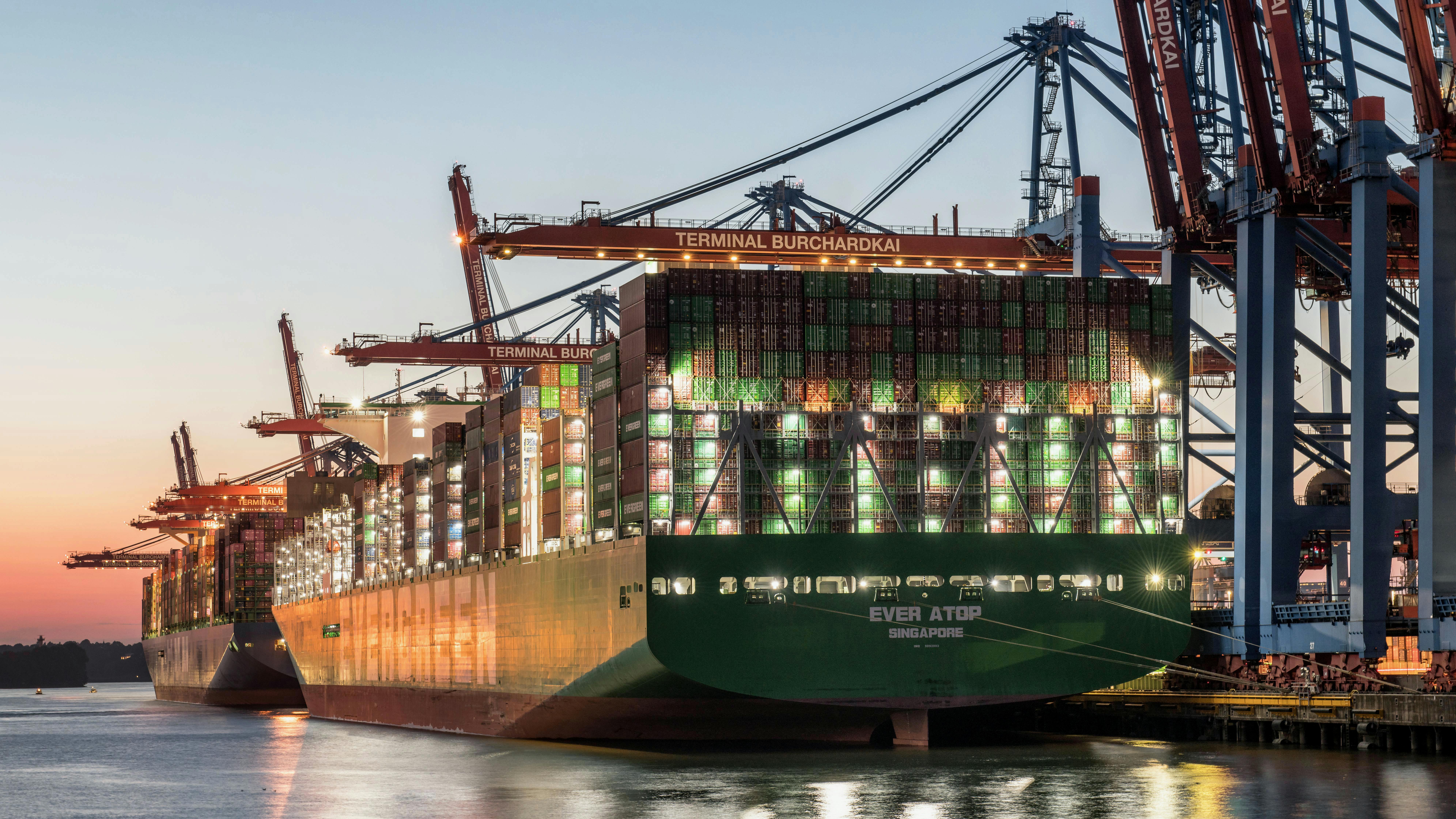
As 2026 unfolds, companies are making strategic shifts from global to domestic and regional supply chains. Discover the undeniable advantages of reshoring and nearshoring for American businesses, including enhanced resilience, reduced costs, superior quality control, and accelerated market entry. Learn how to navigate this transformative landscape, explore leading supply chain consulting services, and identify the best manufacturing technology solutions to optimize your operations and maximize ROI. We compare top options to help you secure a robust, future-proof supply chain.
Introduction to the Topic
The global economic landscape of 2026 is vastly different from even a few years ago. Supply chain disruptions, once considered anomalies, are now a persistent reality, driven by geopolitical tensions, climate events, and evolving consumer demands. For American businesses, the long-held paradigm of solely chasing the lowest unit cost overseas has given way to a more nuanced, strategic approach: the emphatic return of production to domestic and regional shores. This isn't merely a trend; it's a fundamental recalibration of global trade, with reshoring and nearshoring leading the charge towards a more resilient, efficient, and ultimately, profitable future for American enterprise.
This article delves into why an increasing number of companies are actively exploring and implementing these strategies. We'll uncover the compelling economic, operational, and strategic benefits, from mitigating risks and ensuring product quality to fostering innovation and boosting local economies. More importantly, we’ll provide actionable insights and compare the best options available today for businesses looking to make this critical transition, ensuring you're equipped to make informed decisions for your supply chain's next chapter.
Backgrounds & Facts
The seeds of the current reshoring and nearshoring movement were sown during the tumultuous years between 2020 and 2024. The COVID-19 pandemic exposed the fragility of extended global supply chains, leading to widespread stockouts, production halts, and astronomical shipping costs. Subsequent trade disputes, escalating labor costs in traditional manufacturing hubs, and a heightened focus on environmental, social, and governance (ESG) factors further accelerated this pivot.
By 2026, data from organizations like the Reshoring Initiative indicates a sustained upward trajectory in American manufacturing job creation linked to reshoring. Major sectors, including electronics, automotive, medical devices, and textiles, are witnessing significant investment in domestic facilities. For instance, a recent report by the Institute for Supply Management highlighted that over 70% of U.S. manufacturers surveyed are actively pursuing or have already implemented strategies to bring production closer to home. Governments, both federal and state, have responded with robust incentives, tax breaks, and infrastructure development programs designed to attract and retain manufacturing within U.S. borders and neighboring countries like Mexico and Canada.
Reshoring refers to the practice of bringing manufacturing and services back to the country of origin. This often involves significant investment in new domestic facilities, technology, and workforce training. Nearshoring, conversely, involves relocating production to a nearby country, typically sharing a border or within the same region, offering benefits like reduced transit times and cultural proximity while still leveraging potentially lower labor costs or more favorable trade agreements. Both strategies aim to reduce dependency on distant, complex, and often unpredictable supply lines, prioritizing agility, control, and responsiveness.
Expert Opinion / Analysis
“The era of 'just-in-time' global supply chains is evolving into 'just-in-case' regional networks,” states Dr. Anya Sharma, lead economist at Global Trade Insights. “Companies are no longer viewing reshoring as merely a cost equation, but as a strategic imperative for long-term viability and competitiveness. The initial capital outlay for establishing domestic facilities might be higher, but the returns in terms of risk mitigation, intellectual property protection, and brand reputation are proving invaluable.”
Dr. Sharma emphasizes that this shift isn't about abandoning globalization entirely, but rather about smart diversification. “Businesses are adopting a 'China Plus One' or 'Global Plus Regional' strategy, ensuring critical components and finished goods have multiple sourcing options. This multi-pronged approach builds resilience against future shocks.” Furthermore, the integration of advanced manufacturing technologies such as AI-driven automation, robotics, and additive manufacturing (3D printing) is making domestic production increasingly competitive. “These technologies reduce reliance on manual labor, improve precision, and enable rapid prototyping and customization, blurring the traditional cost advantage of overseas production,” she adds.
However, challenges remain. A significant hurdle is the availability of a skilled workforce in specific manufacturing sectors. “Investment in vocational training and STEM education is paramount,” advises Dr. Sharma. “Companies must partner with educational institutions and government programs to cultivate the next generation of American manufacturing talent.” Infrastructure upgrades, particularly in logistics and energy, are also crucial to support the expanded domestic industrial base. Despite these challenges, the long-term economic benefits—job creation, innovation ecosystems, and a more robust domestic economy—far outweigh the initial hurdles, positioning the U.S. as a powerhouse of advanced manufacturing once again.
💰 Best Options in Comparison (VERY IMPORTANT)
Making the leap to reshoring or nearshoring requires careful planning and strategic partnerships. For businesses looking to optimize their supply chain and invest in a more secure future, several key avenues offer tailored solutions. Understanding these options is crucial for maximizing your ROI and ensuring a smooth transition.
-
1. Supply Chain Consulting & Location Analysis Services
These specialized firms provide end-to-end strategic guidance, from initial feasibility studies and risk assessments to detailed location scouting and incentive negotiation. They leverage data analytics to identify optimal domestic or nearshore sites, considering factors like labor availability, logistics costs, energy prices, and government incentives. Ideal for companies needing comprehensive strategic planning and expert navigation of complex regulatory landscapes.
Leading Providers: Accenture Supply Chain & Operations, Deloitte S&O, Kearney, Reshoring Solutions Group.
-
2. Advanced Manufacturing Technology & Automation Providers
Investing in cutting-edge technology is vital for competitive domestic production. This category includes providers of robotics, AI-driven automation systems, IoT solutions for factory optimization, and additive manufacturing (3D printing) technologies. These solutions reduce labor costs, enhance precision, accelerate production cycles, and enable greater customization.
Leading Providers: FANUC, Rockwell Automation, Siemens Digital Industries, Stratasys, Boston Dynamics.
-
3. Contract Manufacturing & Manufacturing-as-a-Service (MaaS) Platforms
For businesses not ready to invest in their own facilities, domestic contract manufacturers or MaaS platforms offer a flexible solution. These partners provide access to existing U.S. or nearshore production capabilities, allowing companies to scale quickly, reduce capital expenditure, and benefit from specialized expertise. Often involves faster time-to-market.
Leading Providers: Xometry (MaaS), Plexus Corp., Jabil, Flex, regional specialized contract manufacturers.
-
4. Government Incentive & Funding Programs
Federal and state governments offer a myriad of incentives to encourage domestic manufacturing. These can include tax credits for R&D and capital investment, grants for workforce training, low-interest loans, and infrastructure development support. Navigating these programs can be complex, but their financial benefits are substantial.
Key Programs: CHIPS and Science Act (federal), various state-level economic development agencies (e.g., choosetexas.com, madeinamerica.gov initiatives).
Comparison Table: Reshoring & Nearshoring Solutions
| Solution Type | Key Benefits | Initial Investment | Implementation Complexity | Best For | Typical ROI Driver |
|---|---|---|---|---|---|
| Consulting & Location Analysis | Strategic clarity, risk mitigation, optimal site selection, incentive capture. | Medium-High (service fees) | Low (outsourced expertise) | Large enterprises, complex transitions, new market entrants. | Reduced long-term operational costs, maximized incentives. |
| Advanced Manufacturing Tech | Increased efficiency, quality, speed; reduced labor dependency; innovation. | High (equipment, software) | High (integration, training) | Companies building new facilities or upgrading existing ones. | Operational cost savings, faster time-to-market, superior product quality. |
| Contract Manufacturing / MaaS | Flexibility, reduced CAPEX, faster market entry, specialized expertise. | Low-Medium (per-unit/project cost) | Medium (partner selection, oversight) | SMEs, startups, companies testing new products or scaling rapidly. | Reduced capital expenditure, rapid scalability, lower risk. |
| Government Incentives & Funding | Significant cost reduction, financial support for R&D and infrastructure. | Low (application process) | Medium-High (compliance, bureaucracy) | Any company investing in domestic production. | Direct financial savings, reduced total project cost. |
When evaluating these options, consider your company's size, industry, existing infrastructure, and long-term strategic goals. Many businesses find success by combining several of these approaches, for example, utilizing a consultant to navigate incentives and then partnering with a technology provider for automation. Don't delay exploring these opportunities; the competitive advantage of a resilient, localized supply chain is growing exponentially. Request a demo or consultation from leading providers today to secure your manufacturing future.
Outlook & Trends
The trajectory towards regionalized and diversified supply chains is set to intensify. By the close of the decade, we anticipate a further consolidation of manufacturing hubs in North America, bolstered by continued investment in infrastructure and a growing skilled workforce. The concept of “smart factories,” integrating AI, IoT, and advanced analytics, will become standard, enabling predictive maintenance, dynamic production scheduling, and unparalleled efficiency.
Sustainability will also move from a desirable attribute to a non-negotiable requirement. Shorter supply chains inherently reduce carbon footprints through decreased transportation emissions. Consumers and regulators alike will increasingly demand transparency and ethical sourcing, pushing companies towards local production that offers greater oversight. The “Made in USA” label will continue to command a premium, driven by patriotic sentiment, perceived quality, and a desire to support local economies.
Geopolitical stability will remain a critical factor. As global power dynamics shift, the ability to produce essential goods domestically or within allied nations will be seen as a matter of national security and economic resilience. This will further solidify government and corporate commitment to reshoring and nearshoring initiatives, transforming the global trade map into a network of interconnected, yet regionally focused, manufacturing ecosystems.
Conclusion
The decision to reshore or nearshore is no longer a niche strategy but a mainstream imperative for American businesses aiming for sustainable growth and resilience in 2026 and beyond. The benefits—from mitigating risks and ensuring product quality to fostering innovation and boosting local economies—are clear and compelling. While the transition demands strategic planning and investment, the array of available consulting services, advanced manufacturing technologies, contract manufacturing partnerships, and government incentives makes this shift more accessible than ever.
By carefully evaluating the options presented and proactively engaging with expert providers, companies can build robust, agile, and cost-effective supply chains that are prepared for any future challenges. The time to act is now. Embrace the American reshuffle, optimize your operations, and secure your place at the forefront of a new era of manufacturing excellence. Your supply chain's future, and your company's prosperity, truly are closer to home.